"Tiny Trends"
Structure
Problem:
Parents struggle with decision fatigue while dressing toddlers each day
Parents repeatedly described mornings as:
rushed
mentally overloaded
full of micro-decisions
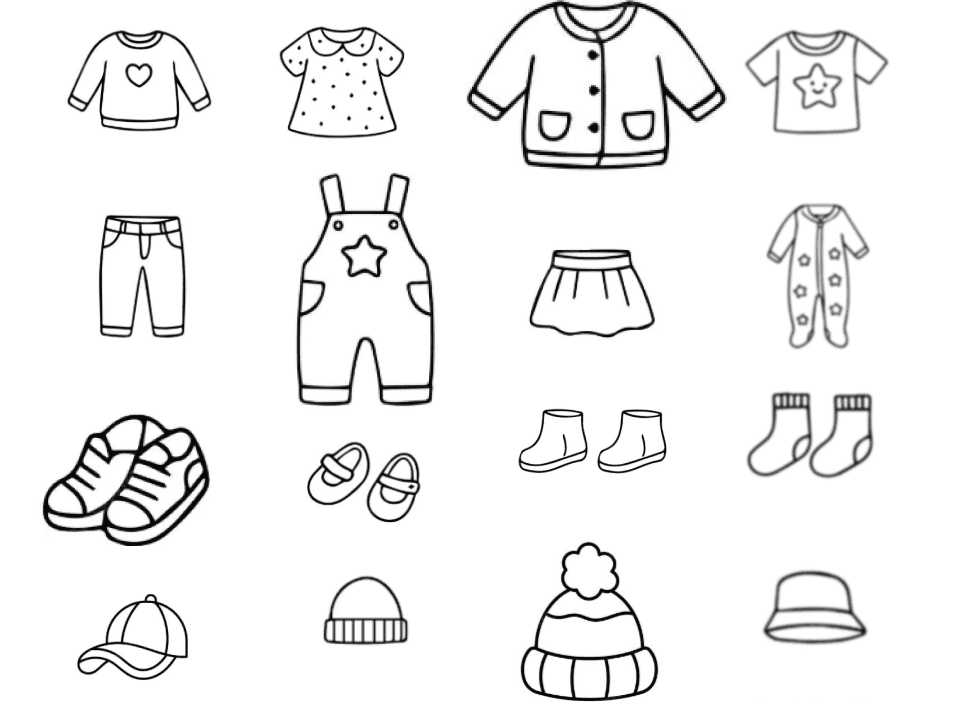
Every additional item multiplies complexity
4 tops×4 bottoms×4 shoes=64 decisions before 8am
Insights from Research
Parents want speed, reliability, and fewer decisions, not more options
Easy access to trendy yet comfortable outfit ideas
Personalized suggestions that fit their child's preferences
Do not want to waste time browsing for multiple stores for outfit ideas
Confusing size charts and ill-fitting purchases
User Journey Mapping
Parents don’t browse wardrobes, they plan outfits around events and moments.
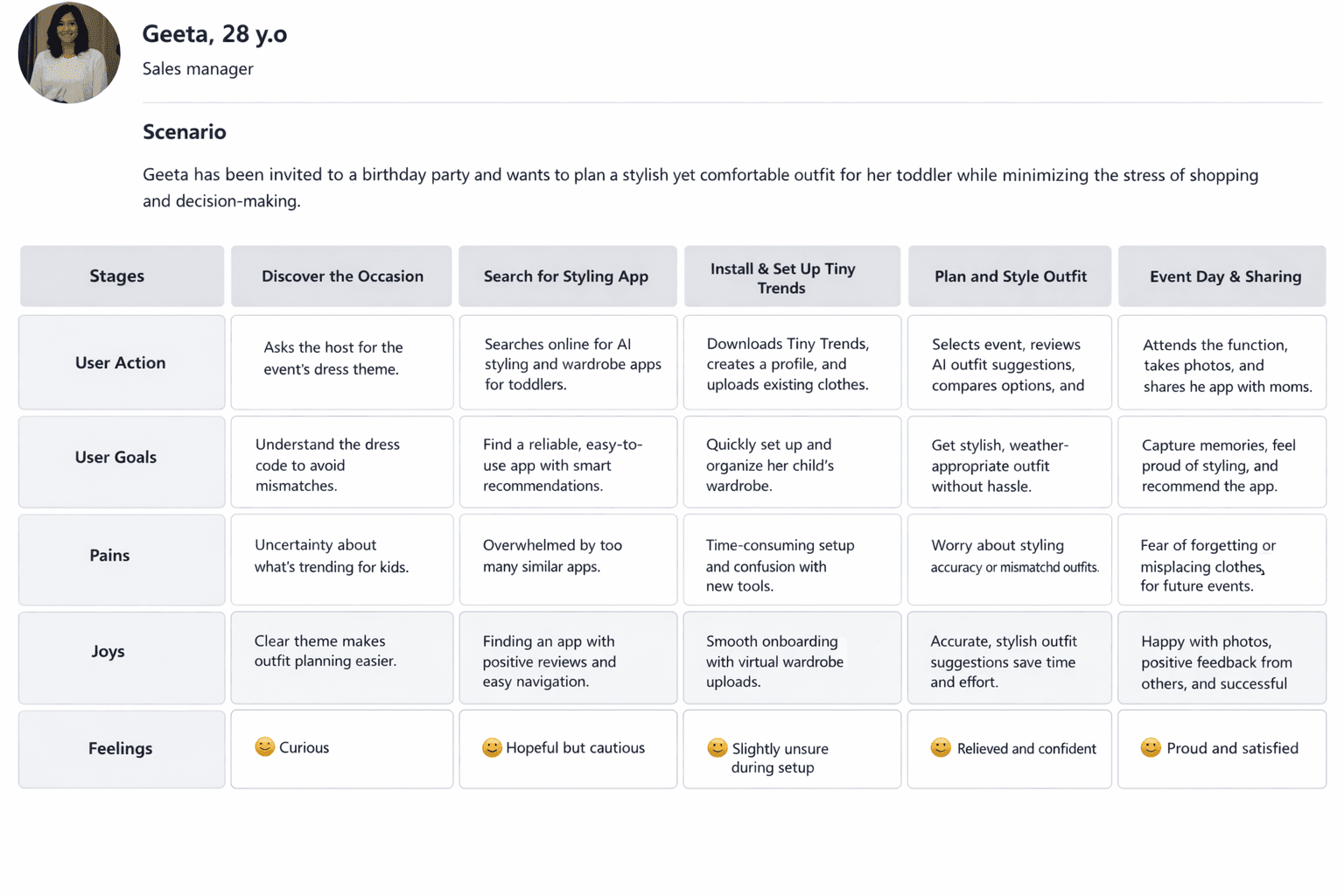

Customer journey map scenario - parent
Constraints
Parents use the app during stressful moments
Parents won’t manually catalog every item
Setup must feel lightweight
Avoid complex filtering
Outfits must feel “thoughtful,” not randomly generated
Solution
A structured AI wardrobe that minimizes daily cognitive load.
The final system:
Automates garment classification
Predicts outfit combinations
Surfaces event-based recommendations
Tracks growth
Replace manual entry with AI-driven outfit recognition
Reason:
Users only need to take a photo of their clothes instead of organizing wardrobes manually.
Key Decision 2:
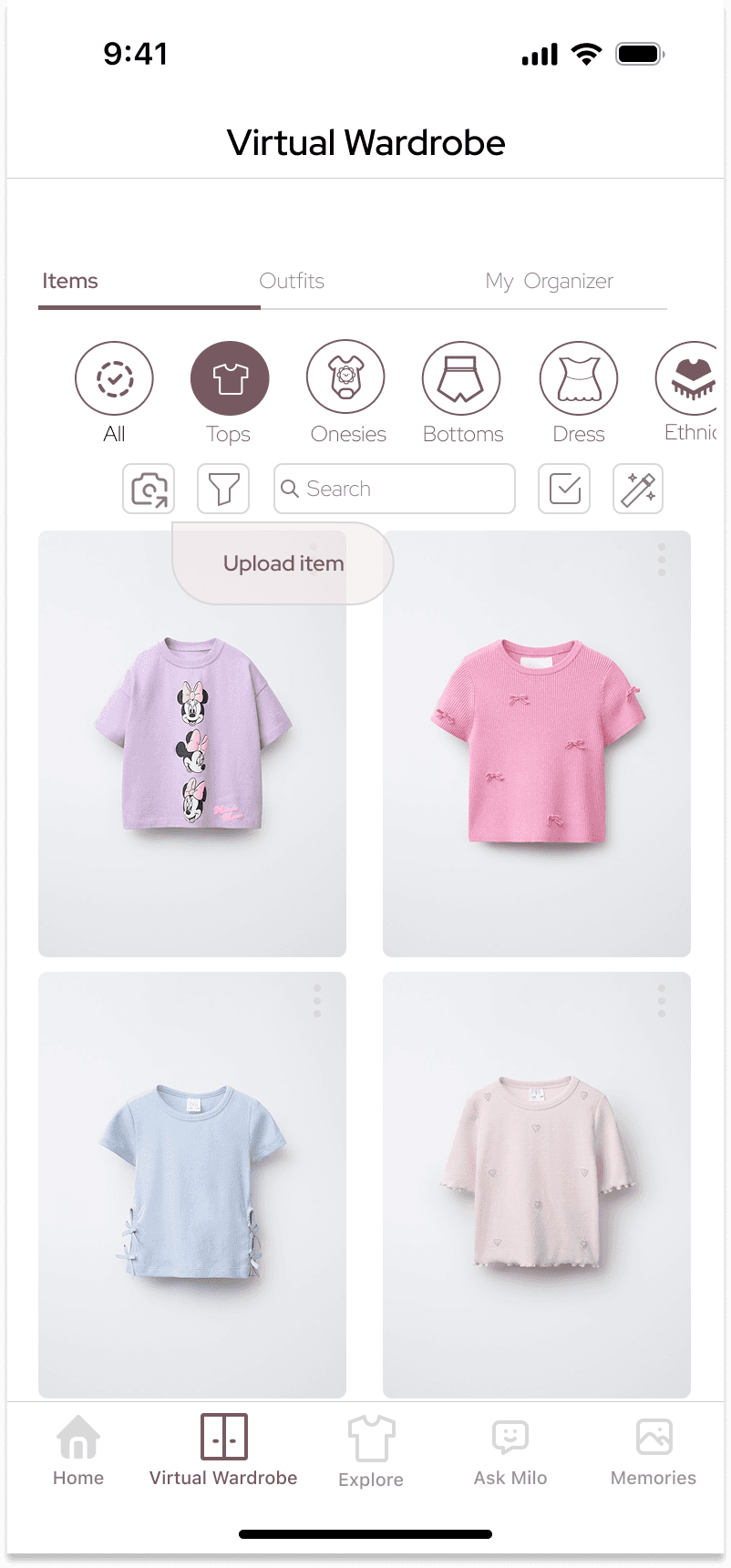
Make Upload a Global Action and reduce filtering friction
Early testing showed forcing users into a dedicated upload tab and having a dedicated upload CTA increased friction. In addition, grid-column layout options and filter options presented too many choices to the user.
The upload/scanning function was integrated into a persistent global action within the wardrobe. Category pills surfaced directly for faster switching(as seen in following section screen).
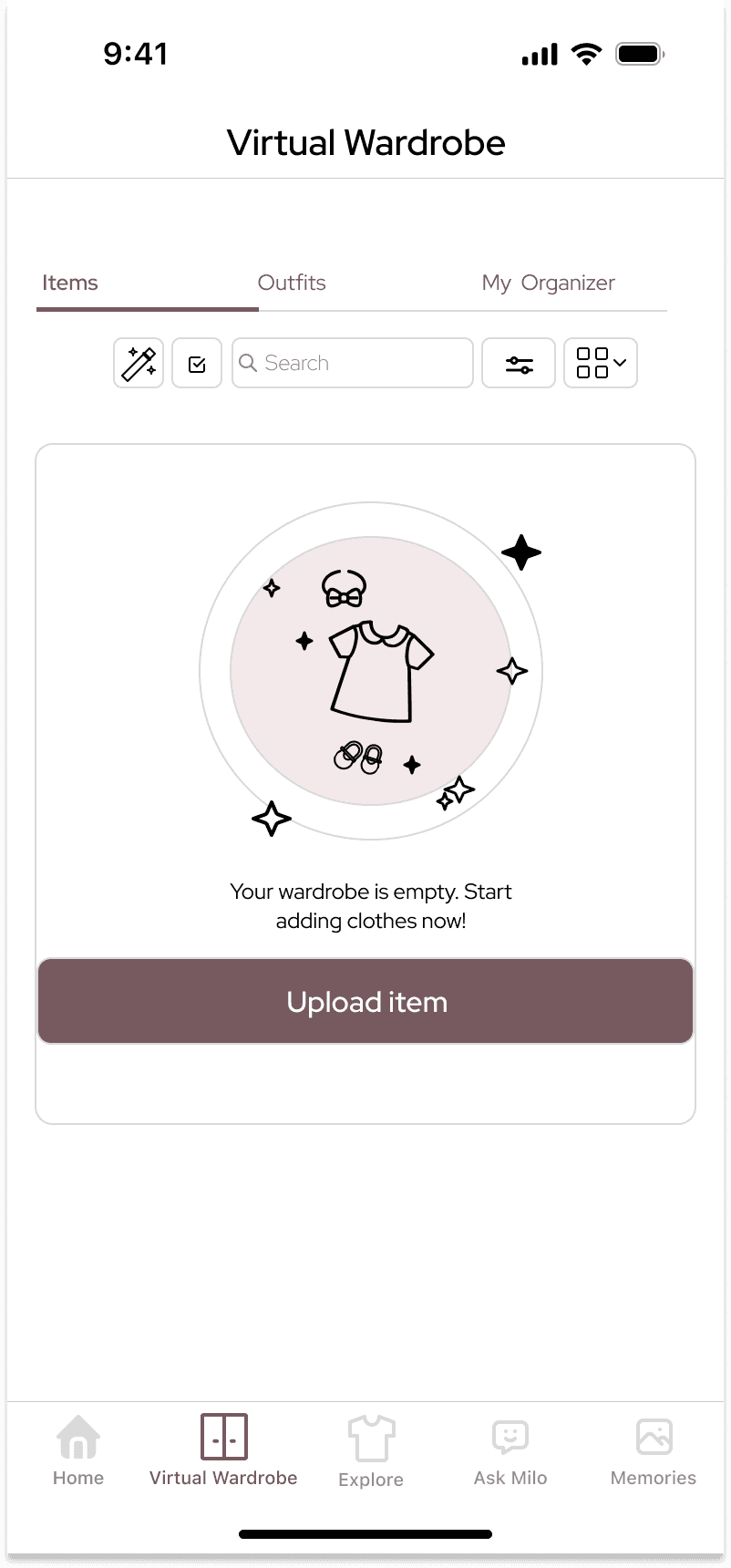
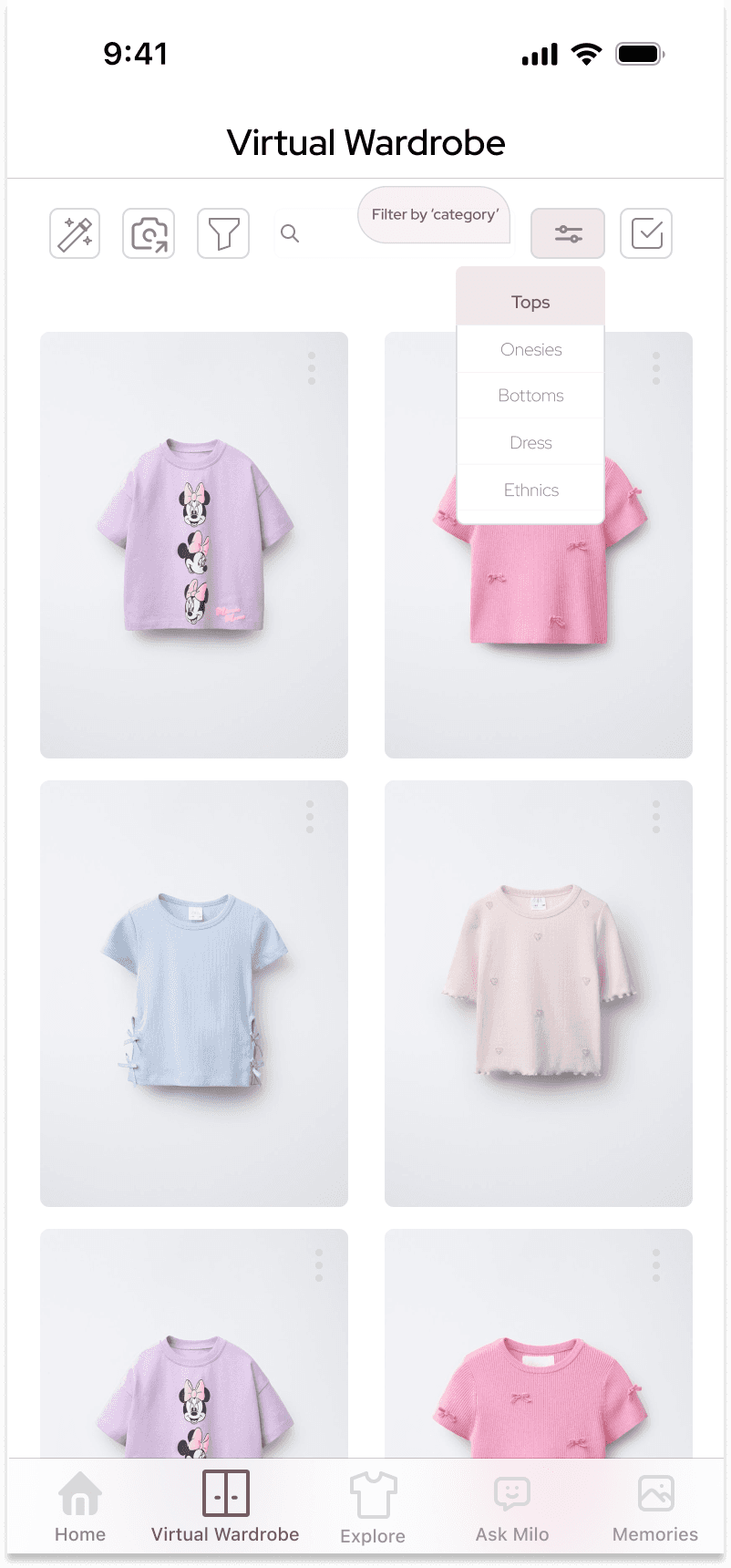
a) 'Upload item' CTA was removed as a singular action b) Filtering actions were deemed as high frequency tasks
Key Decision 3:
Selecting one garment auto-generates a compatible outfit.
Instead of browsing entire catalogs, filtering items, parents select one piece.
The AI provides:
Style match scores
Fit type
Compatible items
Virtual Fit Features
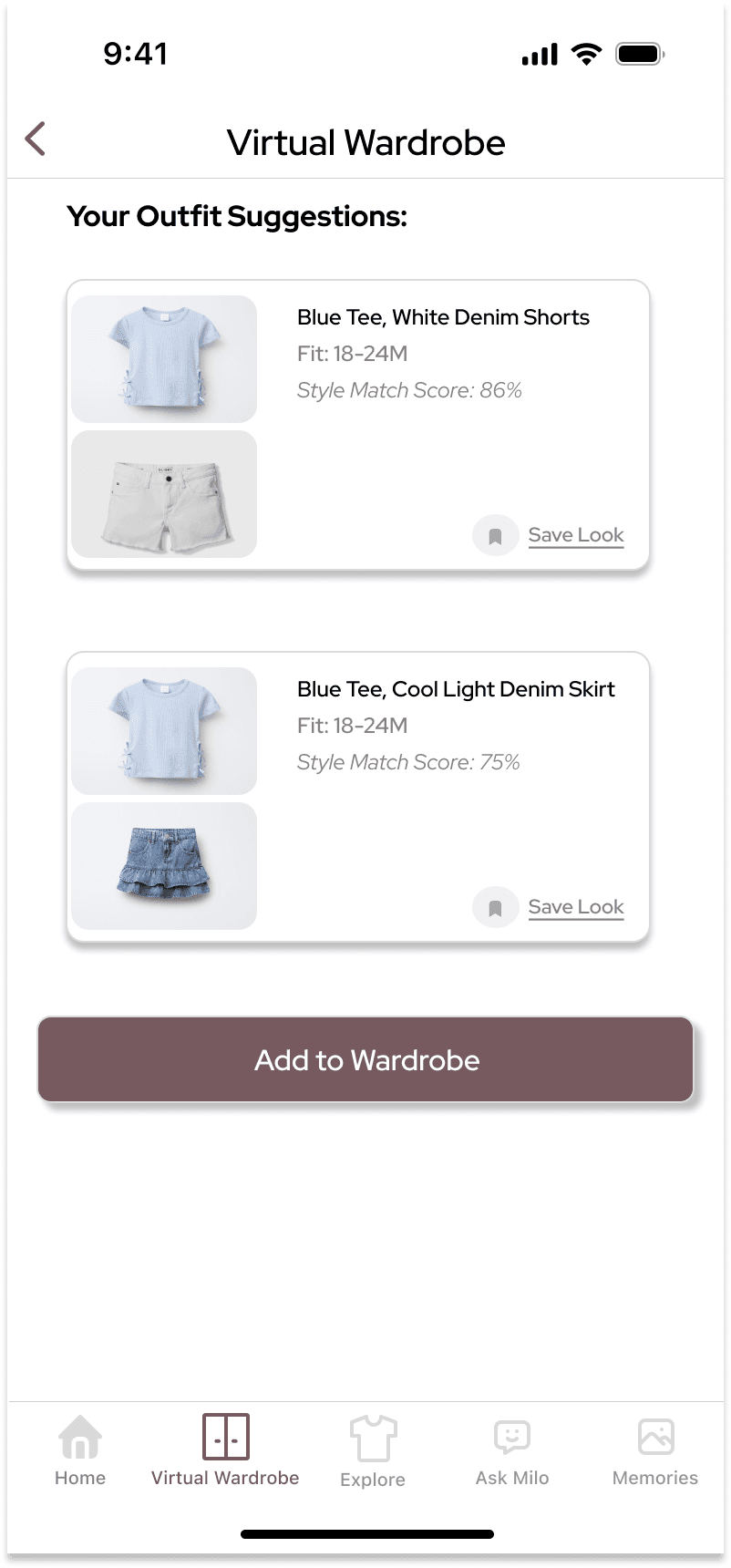
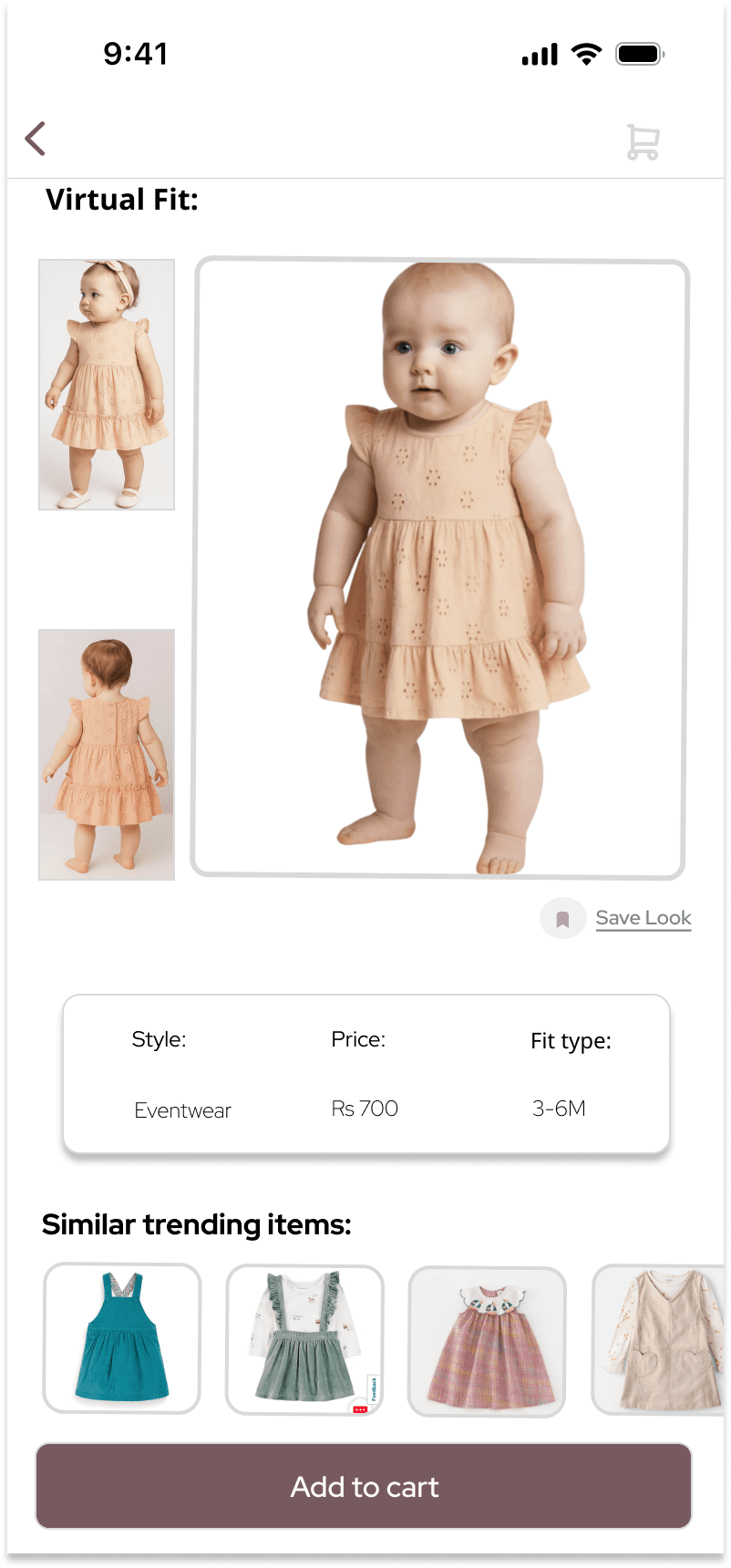
Single selection → full outfit combinations
Key Decision 4: Designing Around Event-Based Planning
Parents think in events, not categories.
Research showed parents plan by:
Birthday
Playdate
Wedding
Festival
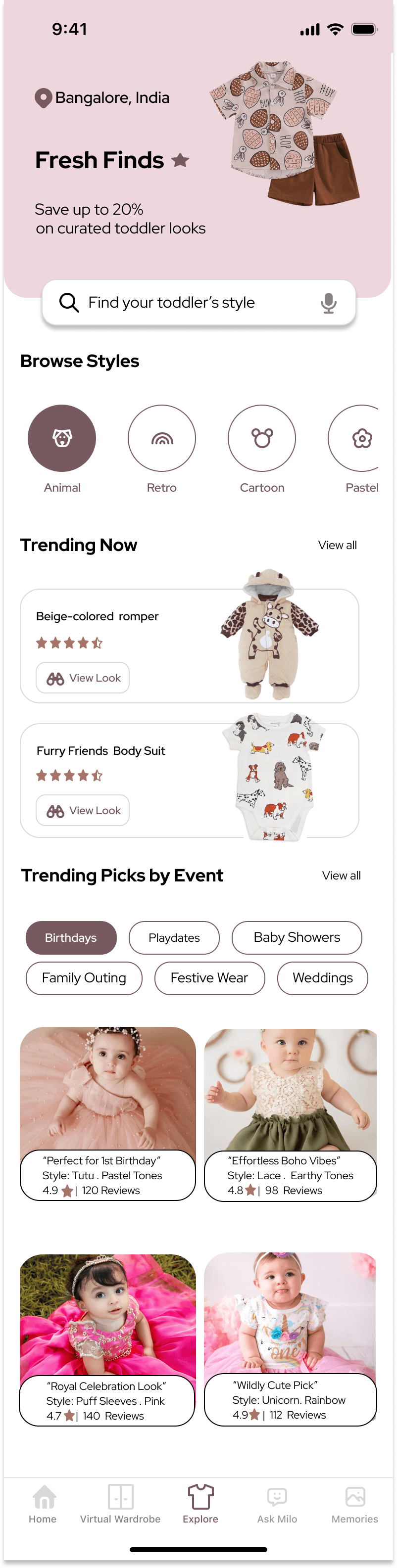
Browse by event, style and trending picks
Design System Foundation
A token-based design system ensures consistent styling and reusable UI components.
The interface is powered by a reusable token-based system covering color, typography, spacing, and reusable UI components.
Key Decision 5:
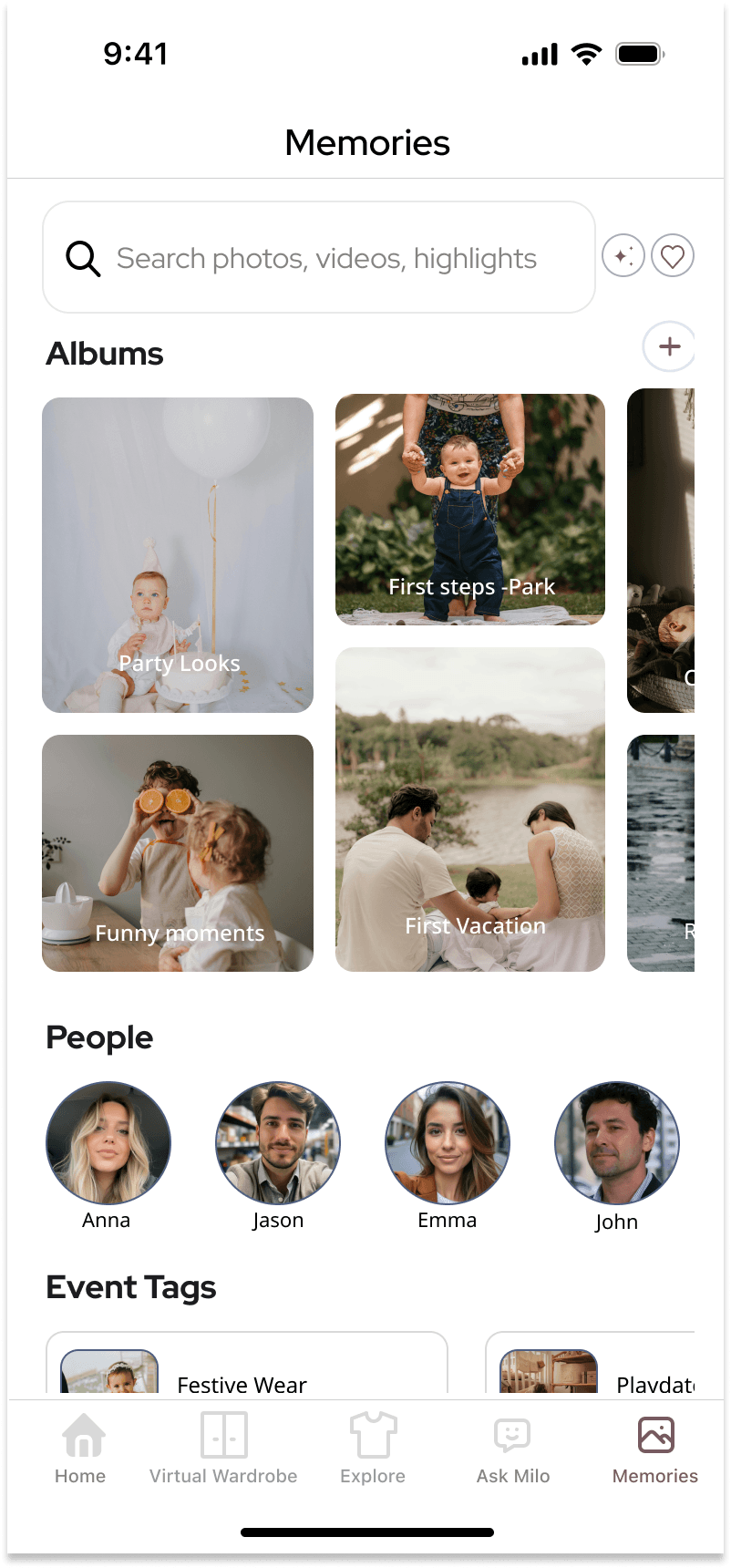
Integrate Toddler's Memories with Wardrobe
The Memories Hub organizes content through:
Event tags
Facial recognition filters
Milestone grouping
Outcome
Demonstrated measurable reduction in friction across core flows.
Reduced time spent selecting outfits
Improved clarity of outfit suggestions
Less emotional stress during mornings
Clearer understanding of matching and seasonal wear
Reflection
Designing for stressed users requires absolute simplicity and clarity.
This project taught me how to design for users under time pressure, using psychology and simplicity to reduce decision fatigue and increase confidence.